
Peniche runs on surf, and surf runs on sand. These dunes build the sandbars behind the waves you came to watch — help us keep them standing.
Take the surveyWhy it matters
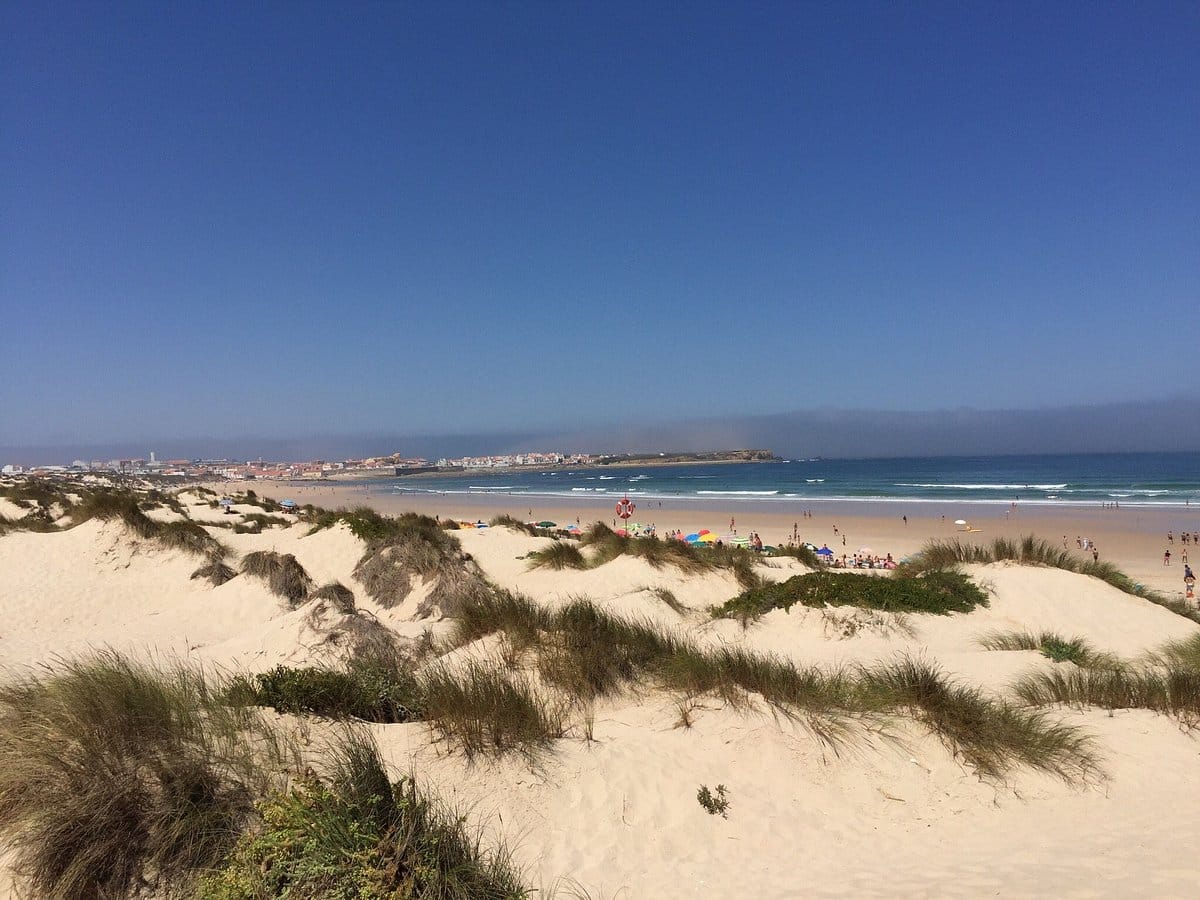
Dunes are the quiet heroes of the coast: a natural defence against storms, a home for unique wildlife and one of our best allies against climate change.
The Peniche–Baleal dune system is vital to the region, which has invested heavily in tourism and recreation. But the more people walk across the dunes, the more the vegetation disappears, and with it the dunes' shape and ecology.
Peniche–Baleal
Dunes absorb storm waves and shield communities from climate impacts.
Coastal zones hold unique habitats that are extremely sensitive to disturbance.
Strong against storms, but easily damaged by a few careless footsteps.
In the past some may have thought sand dunes were just nice places for the plants and animals. There is now a growing realisation they can be a big part of our fight against climate change and storm impacts. Coastal dunes are an excellent, flexible coastal protection. By looking after them, we have a win-win situation.
Protect the dunes and they protect us.
The facts
Vegetation lost
One season of heavy trampling wipes out almost all plant life.
Unmanaged paths
Crisscrossing paths break the Peniche–Baleal dunes into eroding fragments.
Root networks
Marram grass forms an underground web that keeps the sand in place.
Natural barrier
Dunes absorb winter waves of 10–15 metres, protecting our coast.
Spectator guide
Use the elevated wooden walkways. One step off the track crushes delicate seedling roots.
Brush barriers and palisades are restoration zones trapping windblown sand. Do not climb them.
Dunes are not grandstands. Stay on the designated beach area below the dune toe.
Trash harms native fauna and stunts plant regeneration.
Marram grass and rare protected plants hold the sand together. Never pick or trample dune vegetation, not even for a photo.
Roaming dogs disturb shorebirds and crush fragile seedlings. Keep them close and below the dune toe.
Watch
Peniche's coast is shaped by a delicate balance of wind, tide and sediment. The dunes act as a sand reservoir: during winter storms, when swells can top 10 metres, they release the sand that builds the sandbars behind world-class breaks like Supertubos.
When trampling strips the vegetation, the wind blows the sand inland onto roads instead of back to the beach. That matters beyond surfing: the dune ridge is the only natural barrier between the Atlantic and Peniche's homes and roads. Protecting the dunes keeps Peniche's sand dynamics intact for future WSL events.
See dunes erode and recover in the videos above ↑Read the dunes from beach to land and you see a living system. On the foredune, marram grass traps wind-blown sand with root networks up to 5 metres deep. Further inland, dense scrub shelters specialised wildlife and two protected plants found only on Portugal's west coast.
Your voice
A few quick questions. It takes less than a minute.